Climate-Tech Trends 2026: What's Next for UK & European Startups
December 12, 2025
Share


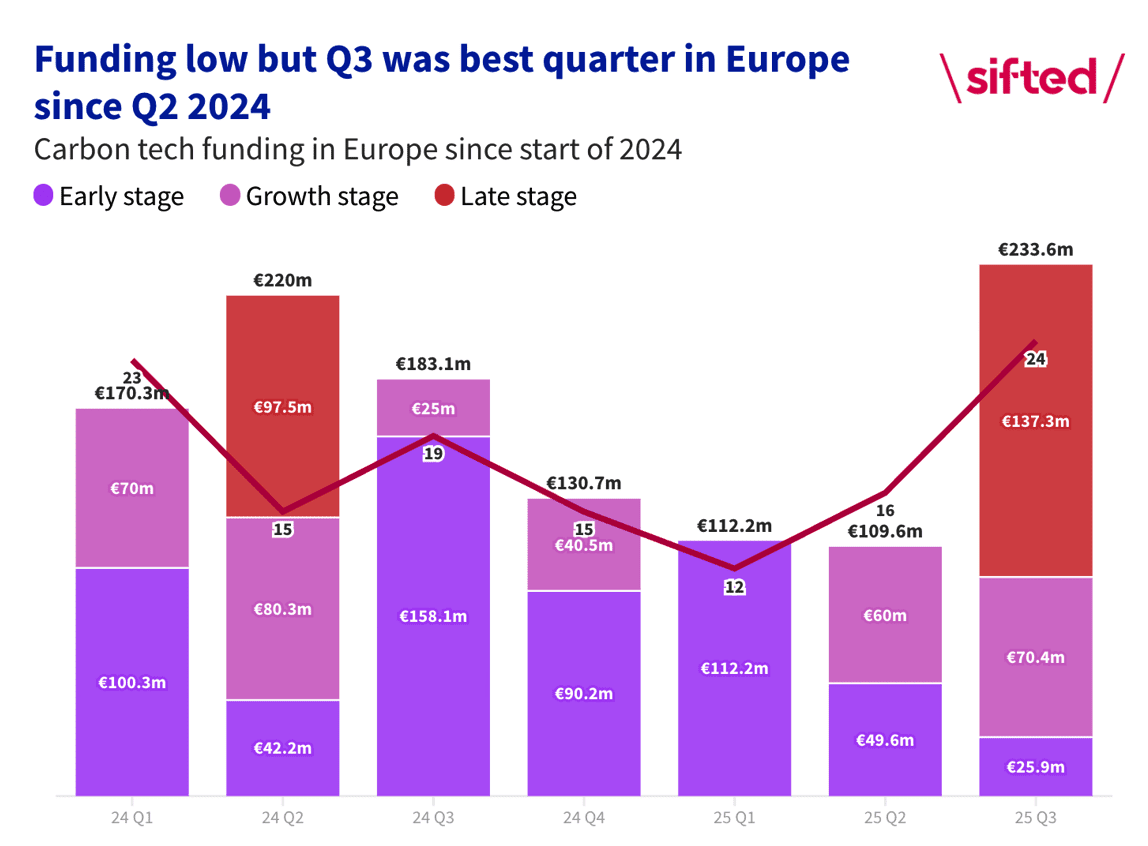
Policy changes in the US meant that the focus shifted to the UK and the EU, which look like a more attractive place to build.
The UK remains the largest start-up technology market. The EU, on the other hand, is doing a massive push to become the place where tech start-ups build, raise, hire, and grow rather than relocating to the US, where there’s traditionally been more capital.
An great example is the 18 strategic AI partnerships have been announced across Europe, through the EU AI Champions Initiative, in a bid to make Europe competitive in this space.
Space has exploded in 2025.
Isar Aerospace from Germany, a launch service provider for small and medium-sized satellites raised ~€150 million.
Space innovation, and in particular satellite imagery, can help us with earth observation, mitigation & adaptation, forest and fire monitoring, and supply chain decarbonisation; a space UK’s Treefera is betting on.
But expanding to space can also be an outcome of the AI boom, which has made land for data centres a commodity high in demand. Hence Bezos and Musk are planning to set up data-centres in space.
Defence is another sector that got a lot of attention (and funding) in late 2025.
This shift has prompted start-ups in the green economy space, like sustainable batteries for electric vehicles, to pivot their focus and narrative to defence, to ensure they remain competitive in investors’ eyes.
McKinsey did a thorough analysis comparing all areas of the green transition, and found that some are moving faster than others.
EVs, Renewable Energy, and Raw materials are leading the growth, while Carbon Capture, Industry, Hydrogen fuels, and Heat Pumps are lacking behind. What’s standing in the way is the physical challenges. In short, we tackled the low-hanging fruit, and now it's time for the really hard stuff.
So what is likely to grow next? E-mobility is seen as the biggest opportunity, followed by green chemicals, and grids. The challenge for European businesses is scaling rapidly and cost-effectively.
2025 was the year AI got embedded across multiple industries, workflows, and use cases. Established tech businesses like Airtable feel the need not just to embed AI into their product, but to ‘refound’, i.e. build from the ground up with AI in mind.
AI-first start-ups have grown rapidly, with legal AI start-up Legora hitting unicorn status just 2 years after starting. UK’s Greyparrot, on the other hand, has developed an AI waste analytics system, which was named one of TIME Magazine’s Best Inventions for 2025.
The trend of AI-first start-ups is bound to continue. With multiple AI solutions hitting the market at the same time however, especially in the B2B SaaS space, I’m foreseeing acquisitions in late 2026. The market may seek to consolidate and enterprise businesses will see acquisitions as a way to move faster in the AI space.
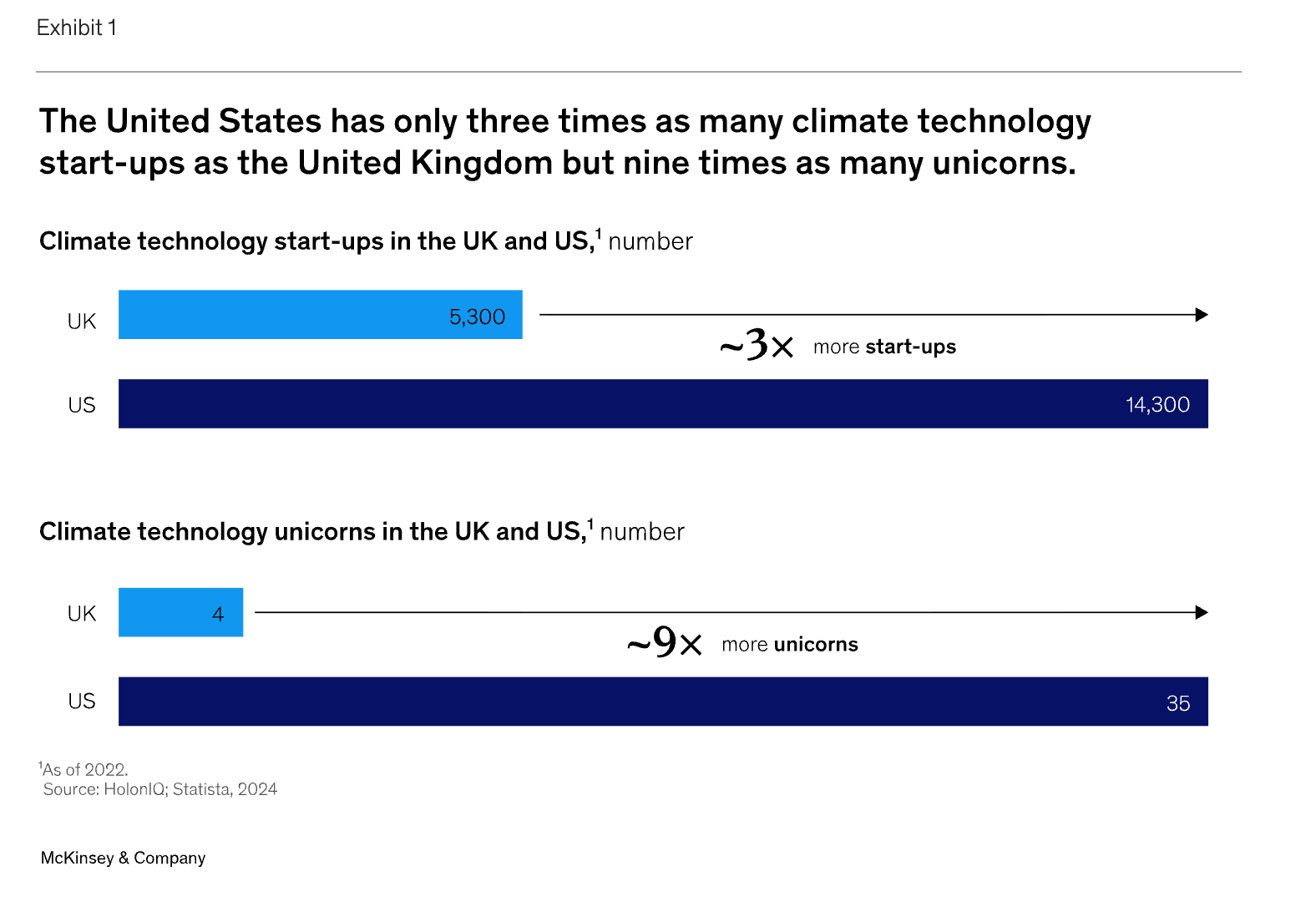
There’s a scaling problem in the UK and Europe.
The US may have 3x more start-ups than the UK, but it has 9x more unicorns!
Climate-tech can be complex and requires significant funding, so effective messaging can help communicate the value to investors, customers, and partners. Apt storytelling on the other hand, can ensure a start-up is positioned competitively for funding in the current climate.
Plus, ongoing communications can engage investors and customers, supporting long-term relationships, which is a crucial component for success.
At Matterra, we specialise in helping forward-thinking tech start-ups define or update their Ideal Customer & Investor Profile, develop messaging that resonates with them, create tailored marketing strategies and set-up the workflows and processes that will maximise the efficiency of your team.
If we can help, get in touch.


